Building RCM 02
Access is only the beginning.

April 13, 2026
Category:
Physical AI
Read time:
12 minutes
Share This:
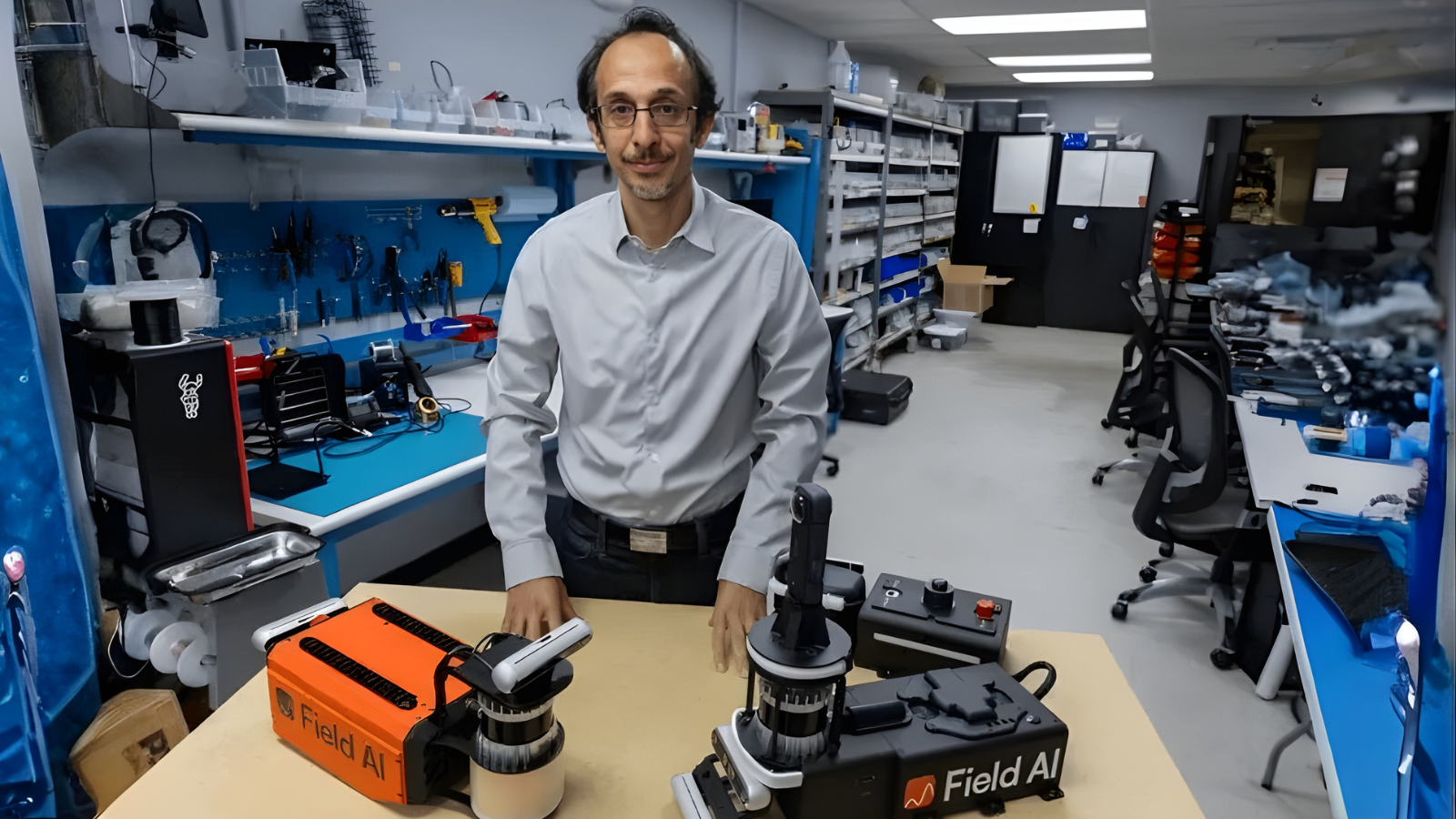
In 2020, the CoSTAR team led by NASA JPL roboticist Ali Agha sent a fleet of robots into the pitch-black tunnels of an unfinished power plant in Elma, Washington. Wheeled, legged, and flying machines. They had no map. No pre-programmed routes. No constant communication with the surface. Just sensors, and an AI system built for difficult environments.
Team CoSTAR won first place in DARPA's Subterranean Challenge Urban Circuit, demonstrating something the robotics industry had been chasing for decades: truly autonomous operation in environments that change, surprise, and challenge at every turn.
Two years later, Agha walked away from one of the most prestigious robotics positions in the world to commercialize what his team had learned. The company he founded raised $405 million at a $2 billion valuation from Jeff Bezos, Bill Gates, and Nvidia. The bet is that the key to unlocking robotics' trillion-dollar future is software that can handle the messy, unpredictable, constantly-changing real world.
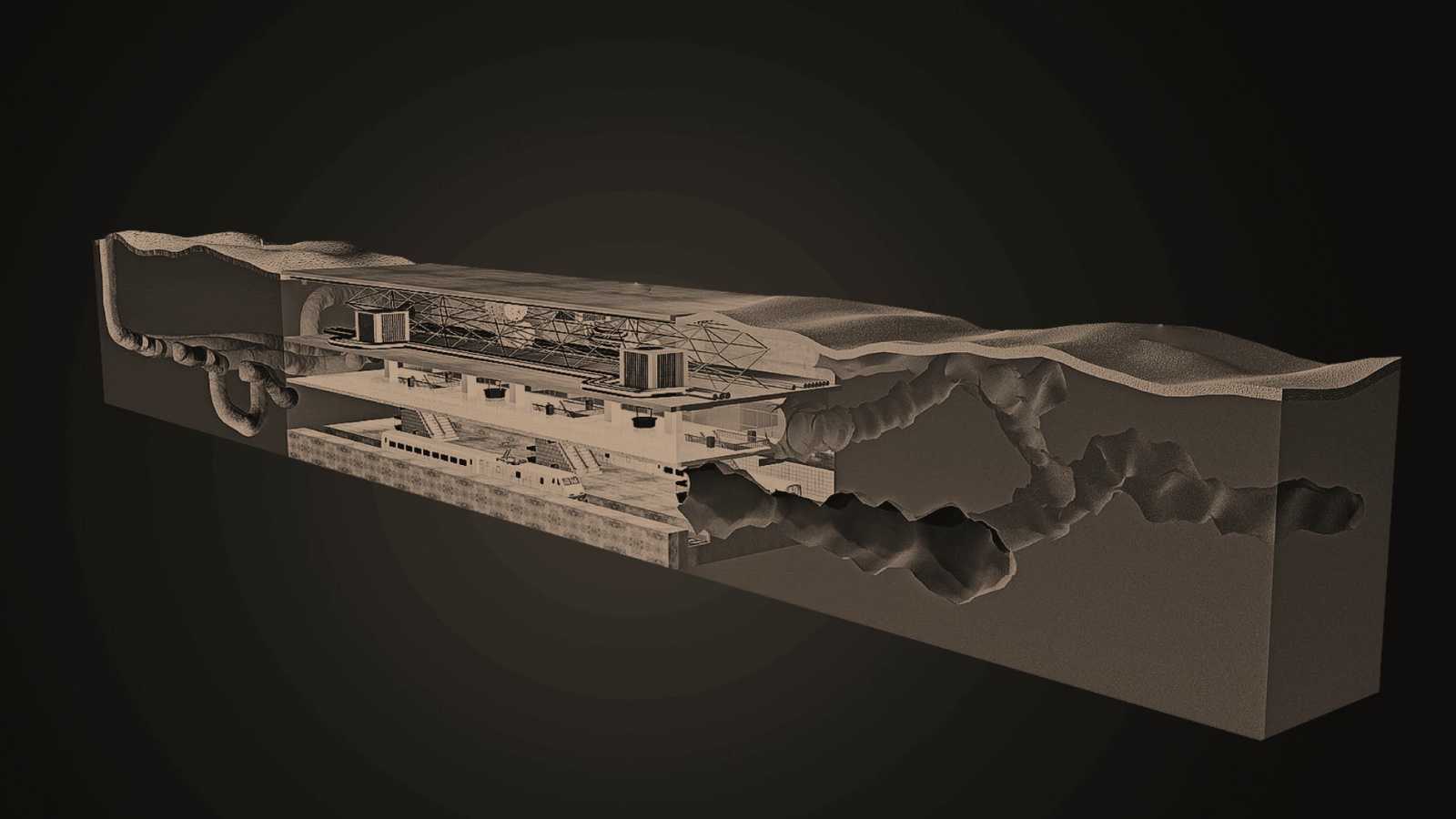
The DARPA Subterranean Challenge ran from 2018 to 2021. For this challenge, DARPA created scenarios designed to break robots: collapsed tunnels filled with dust, multi-story urban infrastructure without light, natural cave systems with passages barely wide enough for machines to squeeze through.
Teams had one hour to send robots into these environments to search for survivors, locate hazards, and map the unknown. Communication was intermittent at best. Robots would drop offline for minutes at a time. A single wrong turn could mean losing a $200,000 piece of equipment forever.
Most teams approached this with meticulous planning. Detailed sensor arrays, redundant systems, conservative strategies. Agha's Team CoSTAR took a different approach. They built NeBula (Networked Belief-aware Perceptual Autonomy), an autonomy framework designed around a radical vision: embrace uncertainty rather than trying to eliminate it.
Traditional robotic systems require perfect knowledge to make perfect decisions. NeBula operated in what roboticists call "belief space," reasoning about probability distributions rather than certainties.
When a robot's LIDAR sensor detected an opening, NeBula asked: How confident are we? What if the sensor is degraded by dust? What if that opening is actually a hazardous drop? Should we risk this path or find another?
This probabilistic approach permeated every component. In the Tunnel Circuit in 2019, Team CoSTAR placed second. They learned, adapted, refined. In the 2020 Urban Circuit, they won decisively, demonstrating multi-robot coordination across heterogeneous platforms in one of the most challenging robotics challenges ever constructed.
The victory validated that an entirely different approach to robotic autonomy was possible.
Ali Agha's path began with planetary exploration. After earning his Ph.D. in Computer Science and Engineering from Texas A&M University, Agha joined MIT as a postdoctoral researcher. There, he began working closely with future FieldAI co-founder Shayegan Omidshafiei, forging a collaboration that would span years and multiple institutions.
Agha spent time at Qualcomm Research before landing at NASA's Jet Propulsion Laboratory in 2013. For nearly a decade, he led some of the nation's most ambitious autonomy projects. NASA's Autonomous Mars Cave Exploration, preparing for the search for life in planetary subsurface voids. His work earned him the NASA NIAC fellowship and the Lew Allen Award. His research papers have been cited thousands of times. He was living the dream that most roboticists aspire to: pushing the boundaries of what's possible on other worlds.
But Agha increasingly recognized that the technology his team was developing for Mars had immediate applications on Earth. "FieldAI is not just a startup," Agha explains. "It's a culmination of decades of experience in AI and its deployment in the field."
FieldAI builds foundation models trained on the physical world itself. The name reflects the core thesis. The "field" refers to field robotics: robots operating in unstructured, real-world environments where things break, conditions change, and Murphy's Law applies with vengeance.
Consider what "unstructured" means in practice. A construction site where yesterday's clear path is today blocked by scaffolding, pallets of materials, and a forklift parked at an angle. An energy facility with pipes, valves, and equipment arranged in ways no two sites replicate. A mine where rockfall changes passages overnight.
Traditional robotic systems fail in these environments because they rely on what FieldAI calls the "map-first" approach. Someone manually maps the space, the robot memorizes the map, and the robot follows pre-programmed routes. This works in warehouses with painted floor lines and predictable layouts. It fails when scaffolding appears overnight or when you're in a tunnel system no one has ever fully mapped.
"Our customers don't need to train anything," Agha says. "They don't need to have precise maps. They press a single button, and the robot just discovers every corner of the environment."
This is FieldAI's core capability: autonomy in unknown, unmapped, dynamic environments.
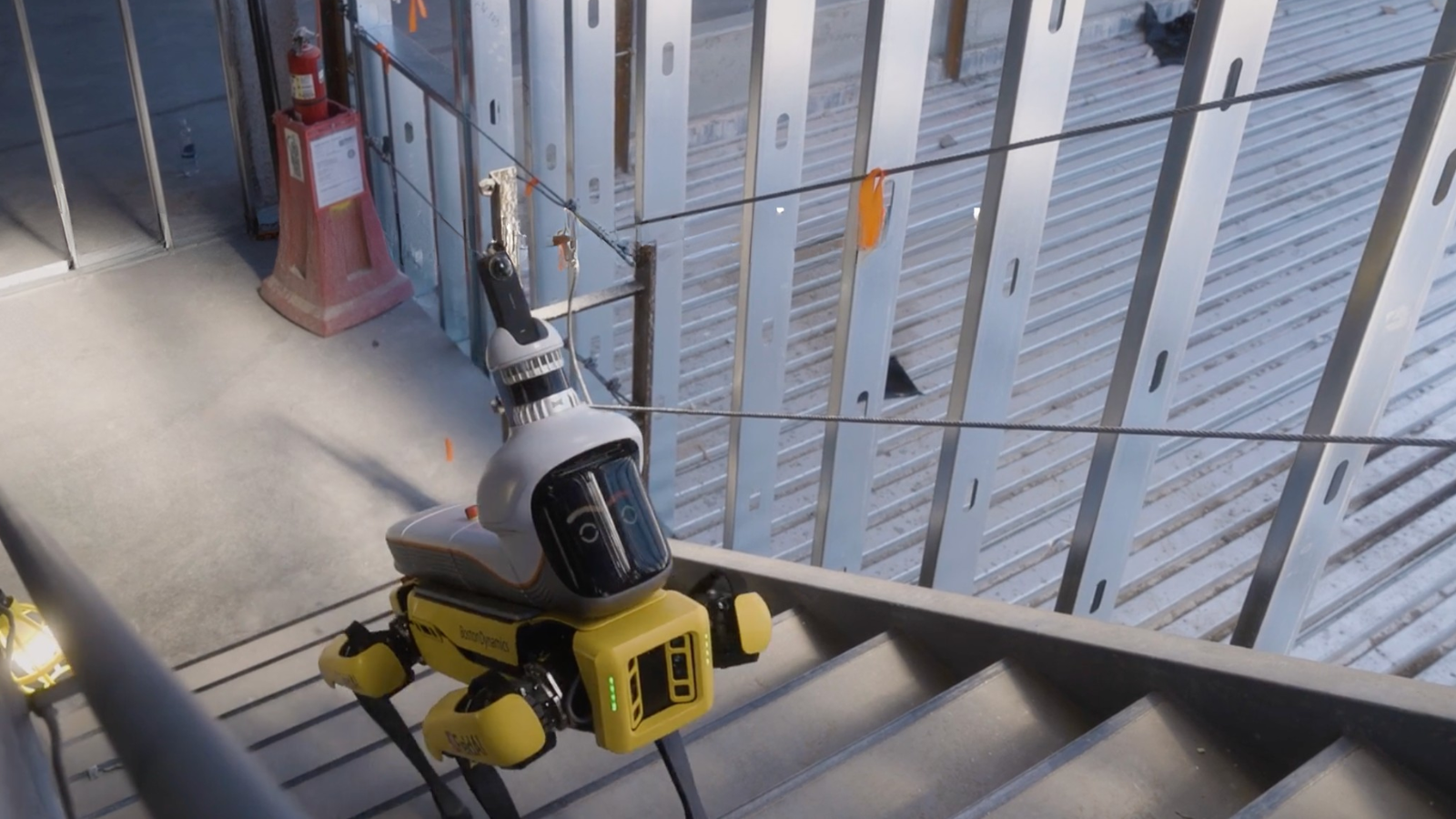
At the heart of FieldAI's platform are Field Foundation Models, or FFMs. While language models ingest text from the internet, FFMs ingest sensor data from physical environments: LIDAR point clouds, camera imagery, inertial measurements, proprioceptive feedback from robot joints, thermal data, acoustic signatures.
FFMs are world models, digital representations of how physical spaces work, updated in real-time as robots move through them.
The key innovation is what FieldAI calls their "physics-first" architecture. While competitors try to adapt large language and vision models to robotics, FieldAI designed FFMs to respect physical constraints, uncertainty, and risk. "We look at AI quite differently from what's mainstream," Agha explains. "We do very heavy probabilistic modeling."
FFMs reason about probability distributions rather than generating confident-but-wrong predictions. When a robot encounters an ambiguous situation, the FFM acknowledges uncertainty and factors it into decision-making just like a human being would.
Three pillars distinguish FFMs.
This allows robots to handle situations they've never seen before, in environments they've never visited, without human intervention.
In August 2025, FieldAI raised $405 million across two consecutive funding rounds, valuing the two-year-old company at $2 billion (!). The investor list is impressive: Bezos Expeditions. Gates Frontier. NVentures (Nvidia's venture capital arm). Khosla Ventures. Temasek. Intel Capital. Emerson Collective. Prysm Capital. Canaan Partners. BHP Ventures. Samsung.
According to Agha, the rounds were oversubscribed, with most investors approaching FieldAI rather than vice versa. For a company founded in 2023, this trajectory is almost unprecedented. What convinced these investors was not just the technology or the team's pedigree, but also the customer traction.
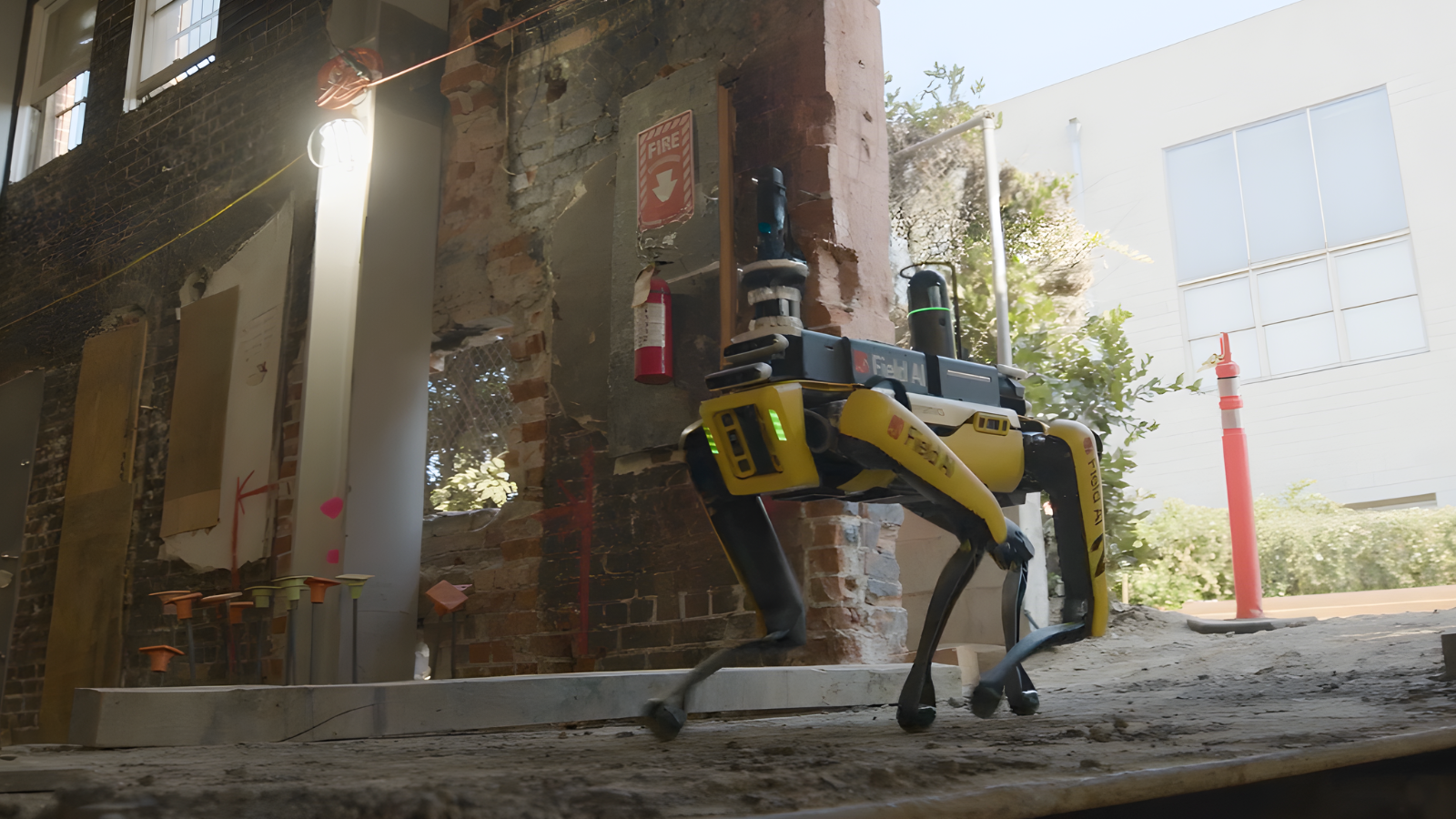
FieldAI already has paying customers across multiple industries. In construction, they provide autonomous site monitoring and progress tracking. FieldAI robots autonomously map large outdoor construction sites that change daily. New materials arrive, scaffolding goes up, equipment moves. The robots adapt in real-time, capturing as-built conditions to compare against design plans.
The partnership with Ryan Companies demonstrates real-world adoption. At Ryan's ATX Tower project in Austin, Texas, FieldAI's autonomous robot dog conducted demonstrations for over 100 construction industry attendees, showcasing autonomous reality capture without manual control, prior mapping, or pre-programmed routes.
In energy and utilities, they're inspecting complex oil and gas facilities, power plants, and hazardous utility sites. FieldAI robots navigate pipe-dense environments, identify equipment for inspection, capture equipment readings, and monitor operational conditions. All autonomously, including in environments where sending humans is dangerous or inefficient.
In manufacturing, they provide facility inspection and monitoring for asset management. Robots patrol factory floors, tracking equipment status and identifying anomalies before they become failures.
Through FieldAI's federal-facing subsidiary Offroad Autonomy, they continue work on DARPA RACER, developing autonomous vehicles capable of navigating long distances off-road without GPS or prior maps.
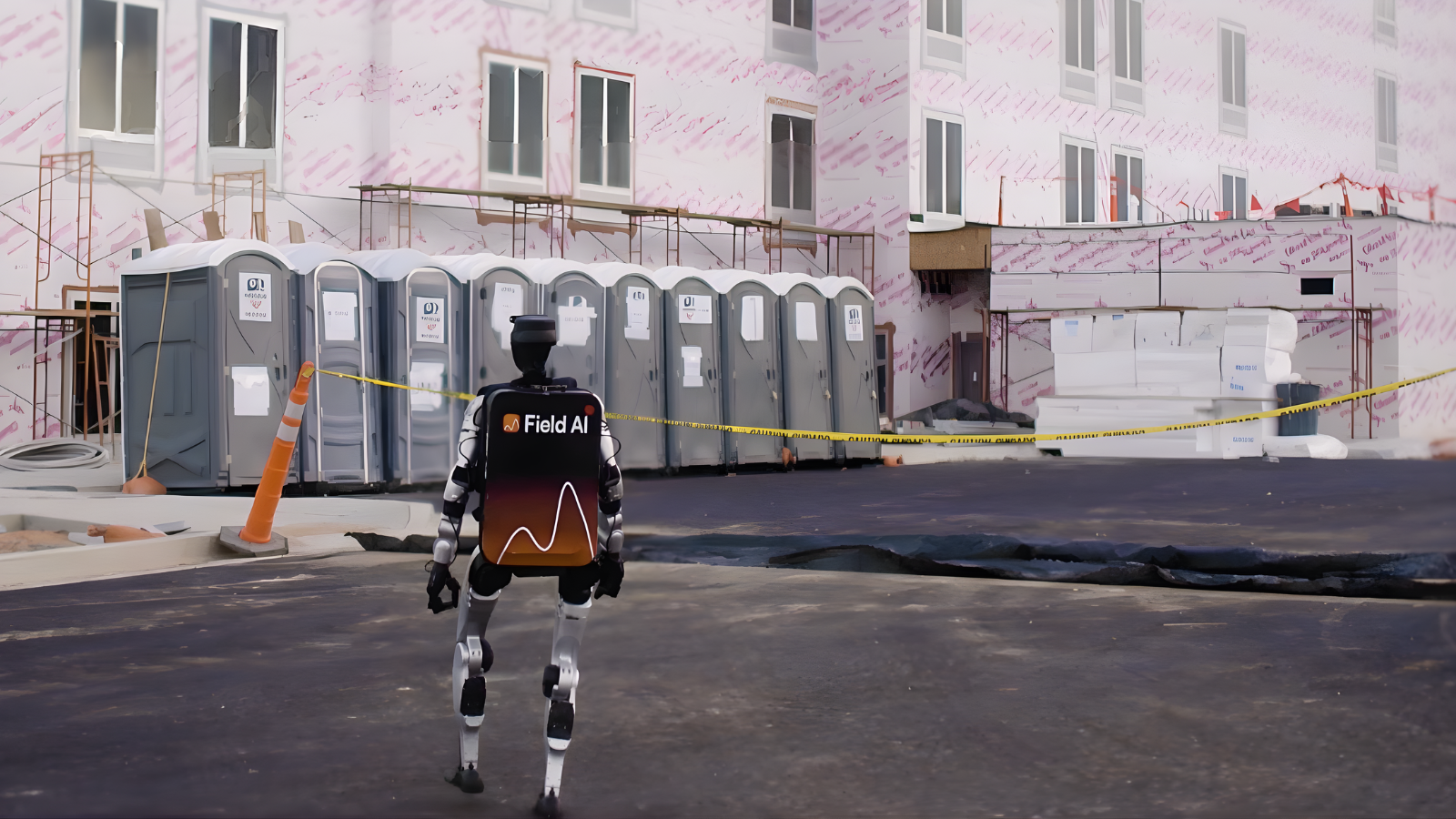
"In these job sites, it can traditionally take weeks to go around a site and map where every single target of interest that you need to inspect is," Agha explains. "But with our robots, our aim is for you to just deploy it, with no training time needed. And then we can just leave the robots."
FieldAI's robots operate autonomously for days on construction sites that change hourly, navigating around new obstacles, adapting to environmental shifts, continuing their missions even when communication with base stations drops. Agha claims FieldAI is "one of the few, if not the only company that can leave robots for days on continuously changing construction sites with minimal supervision."
The data collection from these deployments feeds back into improving FFMs, creating a cycle where every hour of operational deployment makes the models smarter, more robust, more capable.
"Enabling autonomy solutions at scale is an extremely difficult problem, but the deep expertise of the FieldAI team and their unique approach to embodied intelligence reflects a pragmatic path forward." - Vinod Khosla, American Businessman and Venture Capitalist
FieldAI's most strategic insight is that they build the brain, not the robot.
FFMs work across essentially any mobile robot platform. From quadrupeds (robot dogs like Boston Dynamics' Spot or Unitree's Go2) to wheeled rovers (from small inspection platforms to large autonomous vehicles). From flying drones (for aerial inspection and surveying) to tracked vehicles (for rough terrain). Humanoids is the hot new platform category.
"Fundamentally, FieldAI is a software company," Agha emphasizes. They make sensor payloads that integrate with their autonomy software, but even those payloads are adjustable based on the platform.
This strategy mirrors successful technology revolutions. Windows powered PCs from multiple manufacturers. Android powers phones from hundreds of brands. FieldAI provides the intelligence layer that makes robots useful, regardless of who manufactures the hardware.
The market is vast. Industrial automation, inspection, logistics, construction, energy, mining, agriculture. Any industry with physical operations that are repetitive, dangerous, or expensive stands to benefit from autonomous robots. Current estimates put the addressable market in the trillions of dollars. But that market only materializes if robots can actually operate reliably in the real world.
FieldAI sees three waves of value. Near-term, right now through 2026, they're focused on inspection, monitoring, and data collection. These applications are already deployed and generating revenue. Robots that autonomously patrol industrial sites, capture data about equipment conditions, track construction progress, and identify anomalies.
Mid-term, 2026 through 2028, they'll move into intervention and manipulation. As FFMs become more sophisticated and as manipulation capabilities improve, robots move beyond sensing to acting. Opening valves, clearing debris, transporting materials, assisting with assembly tasks. This expands the scope of autonomous operations significantly.
Long-term, 2028 and above, the goal is general-purpose autonomy across all platforms. A construction robot that can inspect, transport materials, and assist with assembly. An energy robot that can navigate facilities, identify issues, and perform repairs. A general-purpose humanoid that combines mobility, manipulation, and intelligence to tackle whatever tasks emerge.
The key distinction is "operational." Not just moving or sensing, but executing complete missions without human intervention. This separates FieldAI from companies focused purely on manipulation or locomotion. FFMs enable end-to-end mission autonomy: understanding goals, planning approaches, executing multi-step sequences, adapting to surprises, and completing objectives.
The robotics landscape is crowded with well-funded startups claiming to solve autonomous operations. What distinguishes FieldAI?
Several trends are converging to create an inflection point for field robotics.
Hardware commoditization means robot platforms are becoming more capable and affordable. Quadrupeds that cost $500K five years ago now cost $50K. This makes the business case for autonomy much more attractive.
Compute efficiency improvements mean edge compute devices can now run sophisticated AI models in real-time on-robot. FFMs operate without cloud connectivity, which was impossible just a few years ago.
Data accumulation gives FieldAI an advantage. They benefit from years of DARPA and NASA deployments, plus over a year of commercial operations. This head start in quality field data is difficult for competitors to replicate quickly.
Customer readiness has shifted. Labor shortages, safety regulations, and operational efficiency pressures are forcing industries to reconsider automation. Customers are ready to deploy autonomous robots, if they actually work.
The investment climate remains strong. Despite broader tech market volatility, investors remain bullish on robotics and AI infrastructure. FieldAI's $405M raise at $2B valuation in 2025 demonstrates this conviction.
Perhaps most importantly: the technology works. After decades of robotics companies over-promising and under-delivering, FieldAI enters the market with technology that's been validated in demanding environments.
FieldAI is following a software-first expansion model centered on increasing operational scope.
The initial focus is autonomous inspection and data collection, where reliability and immediate ROI are clear. From there, capabilities extend into intervention and manipulation as models improve and hardware ecosystems mature.
Over time, the objective is to become the intelligence layer for physical operations across industries. This includes planning, execution, and adaptation across multi-step tasks without human oversight.
The company is scaling accordingly. With significant capital raised, FieldAI is investing in deployment infrastructure, partnerships with hardware manufacturers, and continued model development.
Near-term growth is concentrated in construction, energy, and manufacturing, with expansion into mining, logistics, and agriculture underway. Federal programs and off-road autonomy initiatives continue to reinforce technical depth.
The strategy is consistent with successful software platforms. Establish reliability in a narrow use case, expand functionality, and ultimately generalize across environments and tasks.
Robotics has cycled through hype and disappointment for decades. Industrial robots succeeded in structured manufacturing environments. Warehouse robots succeeded in controlled logistics facilities. But general-purpose autonomy in unstructured environments remained elusive.
FieldAI may be the catalyst that changes this. They're building the intelligence layer that makes any robot capable of autonomous operation in messy, unpredictable, constantly-changing real-world environments.
From 900 feet underground in DARPA challenges to construction sites in Austin, from energy facilities in Japan to federal programs across the U.S., FieldAI's technology is proving that reliable field autonomy is deployable today.
The transformation from robots that need perfect conditions to robots that handle reality could be worth trillions.
FieldAI raised $405 million across two consecutive rounds in August 2025, achieving a $2 billion valuation. The company is currently deployed across hundreds of industrial sites globally and is actively expanding its team and deployment footprint.
XMAQUINA is a decentralized ecosystem, giving a global community early exposure to the world’s leading robotics companies before they disrupt trillion-dollar industries.
Now, you don’t have to be sidelined. Own the rise of humanoids.
Join our Discord and connect with thousands of futurists building the XMAQUINA DAO.
Follow us on X for the latest updates.
Owner: