

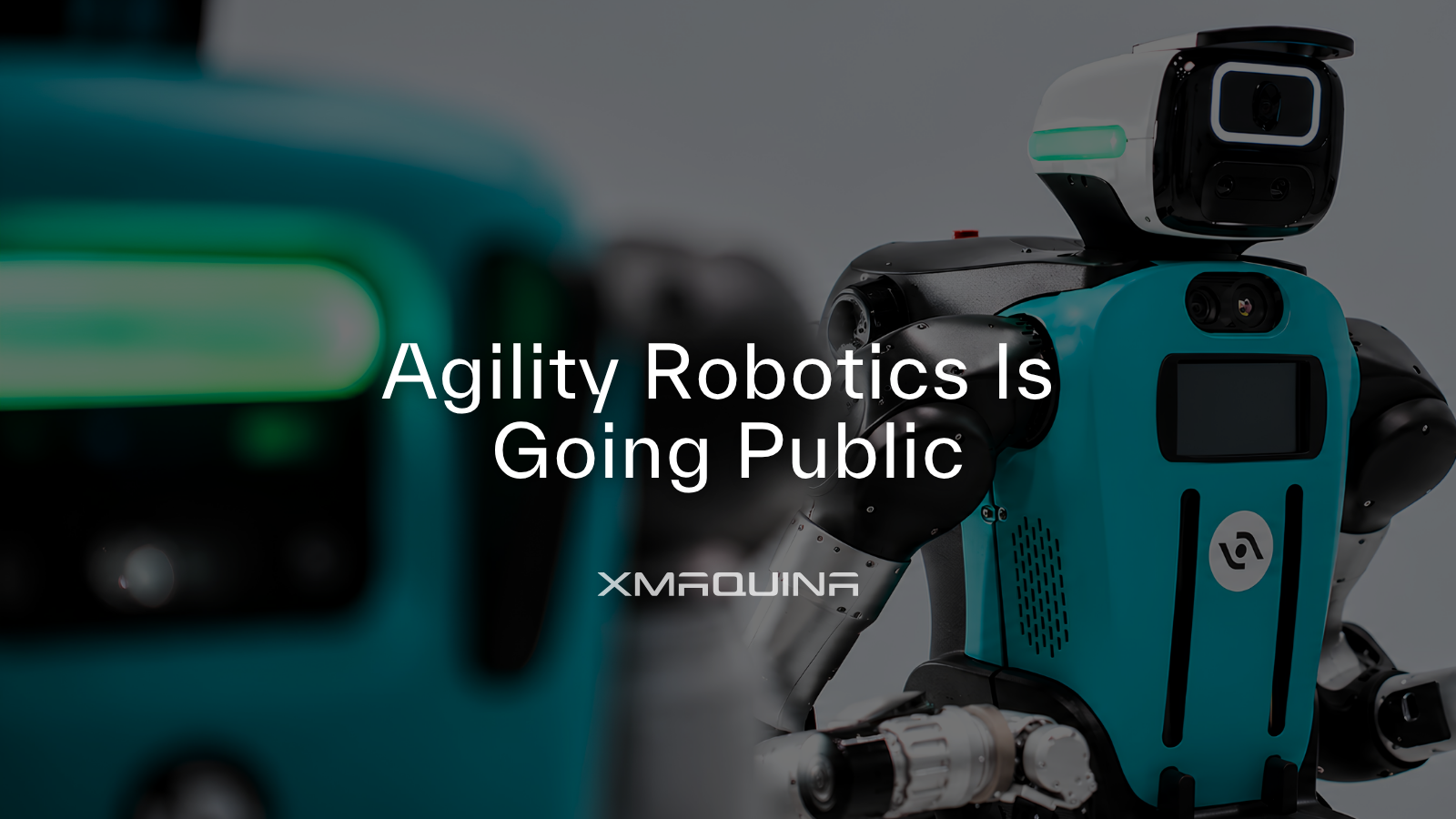
Agility Robotics Is Going Public
What the proposed SPAC transaction means for the DAO.

January 31, 2026
Category:
Physical AI
Read time:
12 minutes
Share This:
The first month of 2026 demonstrated that humanoid robotics is not slowing down.
We’ve already seen meaningful progress across leading companies including, new models released, major funding rounds closed, and partnerships formed that will shape what gets built this year.
January set things in motion. What follows is a year of scale and real-world development. The work is underway.
Skild AI announced a 1.4 billion dollar Series C round, bringing its valuation to over 14 billion. Backers include SoftBank, NVIDIA, and Bezos Expeditions.
Skild’s approach centers on omni-bodied intelligence—a single control system designed to operate across multiple robot types and form factors. Rather than designing software for a specific machine, the company is building a generalised control layer that can adapt to different embodiments.
The scale of the round reflects growing confidence in control-first platforms that can abstract across hardware, reduce per-unit training costs, and accelerate deployment timelines.
1X introduced its World Model, a new cognitive system integrated into its Neo humanoid. The model is trained on large-scale video data and grounded in physical interaction, enabling Neo to interpret natural language prompts, generate plans, and execute multi-step tasks.
World Models represent a key component in the development of general-purpose robotics. By combining visual and embodied learning, they allow robots to operate beyond narrowly defined instructions and adapt to a wider range of use cases without retraining.
This release places 1X among the few companies deploying large-scale cognitive architectures directly into commercial humanoid platforms. The integration of planning, reasoning, and action into a single system marks a technical step toward broader task coverage and long-horizon autonomy.
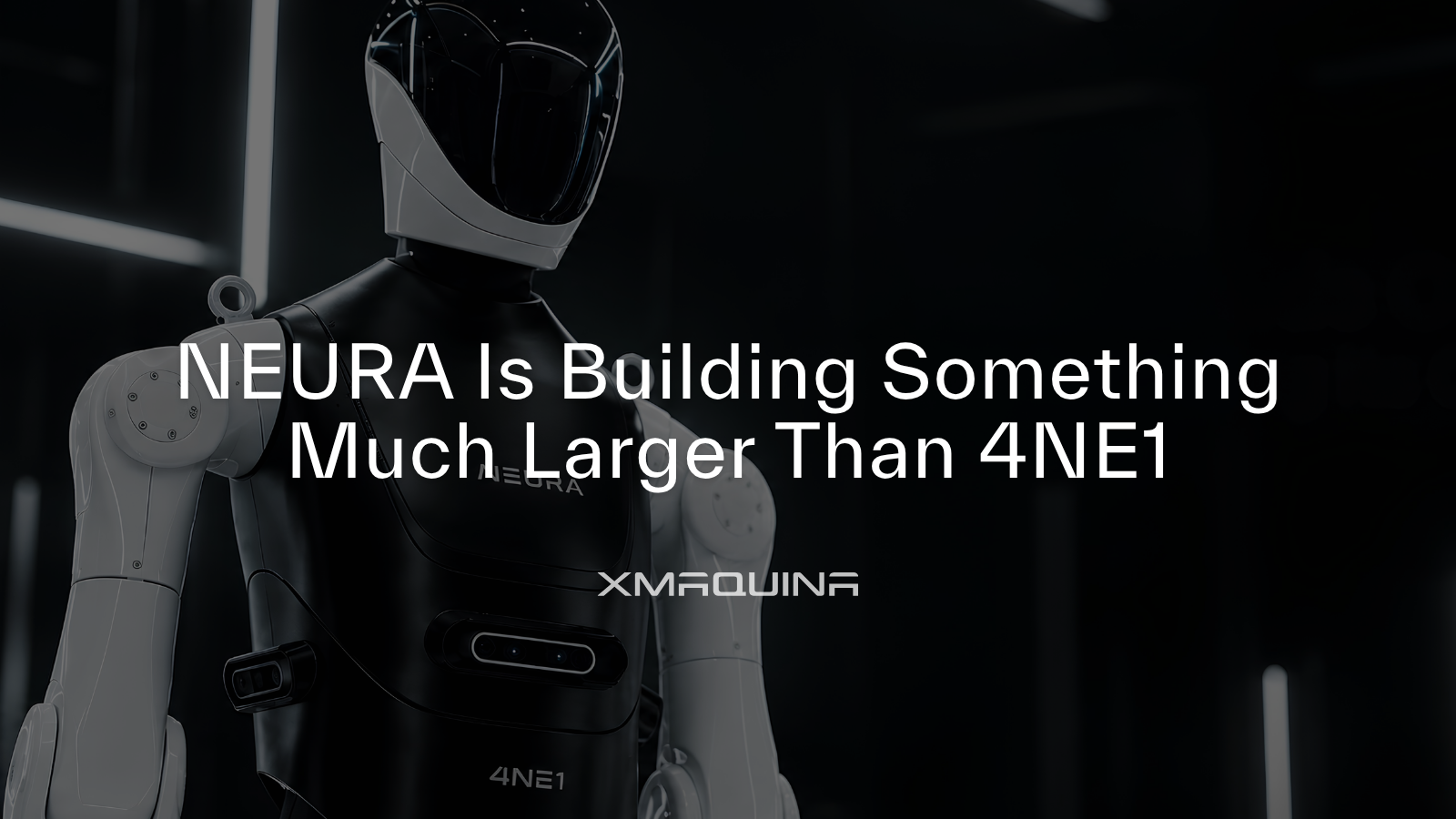
Neura Robotics has begun accepting reservations for 4NE-1, its flagship humanoid developed in partnership with Porsche Design. The robot supports a 100 kg payload and integrates multi-modal AI across speech, vision, and haptics.
Priced at 98,000 euros, the system is entering a range that makes it accessible for industrial pilots. A second variant 4NE-1 Mini is also being introduced, aimed at research and education.
The 4NE-1 is being produced in Germany, with Neura having previously relocated its cognitive systems research to Zurich. With reservations now open to the public, the system becomes one of the few commercial humanoids currently available for early purchase in Europe.
Boston Dynamics unveiled the newest version of its humanoid robot, Atlas, at CES 2026. The system is fully electric, uses lightweight metals like aluminum and titanium, and features 56 degrees of freedom.
Atlas now lifts up to 50 kg, functions in a wide temperature range, and can autonomously swap its own batteries. Most notably, a new partnership with Google DeepMind will bring foundation models to the platform, pushing Atlas beyond physical agility and toward cognitive competence.
This is one of the clearest examples yet of traditional robotics meeting large-scale AI.
The Korean government announced a 770 million dollar commitment to its new K-Humanoid Alliance.
The goal is to become a global leader in humanoid robotics by 2030. Unlike fragmented R&D initiatives, this is a centralized industrial strategy, coordinating research, manufacturing, and deployment across public and private sectors.
National capital is now entering the humanoid space.
LimX introduced COSA, a control architecture that integrates decision-making and actuation in a single stack.
Instead of separating cognition and movement, COSA allows the OLI robot to respond in real time to physical environments. This reduces the delay and fragility often found in modular control systems.
As deployment environments become less structured, unified OS architectures are gaining traction.
Figure AI released Helix 02, its most advanced control architecture to date. The system spans perception, planning, and motor control, supporting full-body autonomy and long-horizon task execution.
Integrated locomotion, dexterity, and tactile sensing bring Figure closer to the type of real-world autonomy required in domestic and commercial environments.
While the robot hardware remains largely unchanged, the software upgrade marks a step toward general-purpose robotics that can adapt through code, not cables.
XMAQUINA’s Genesis Auction crossed 10 million dollars in commitments, with thousands of participants entering alongside institutional funds.
Unlike traditional venture deals, the auction was fully open, designed to decentralize early access to physical AI and robotics infrastructure.
This model reflects a different kind of capital formation. One that prioritizes participation over exclusivity. In a market where ownership is increasingly critical, XMAQUINA is making the bet that robotics shouldn’t be gated behind closed rounds.
XMAQUINA is a decentralized ecosystem, giving a global community early exposure to the world’s leading robotics companies before they disrupt trillion-dollar industries.
Now, you don’t have to be sidelined. Own the rise of humanoids.
Join our Discord and connect with thousands of futurists building the XMAQUINA DAO.
Follow us on X for the latest updates.
Owner:
.png)

