Humanoid Digest: September 2026
Production volumes, commercial orders and new manufacturing infrastructure continued to expand across humanoid robotics.
September 30, 2026
Category:
Physical AI
Read time:
8 minutes
Share This:
September brought a new set of operating milestones across humanoid robotics.
For much of the sector’s recent growth, the numbers attracting attention have been funding rounds and valuations. This month brought a different set of figures, with companies reporting production volumes, customer orders, revenue and manufacturing capacity.
Capital formation remains important, but there is now more information available on what companies are producing, where robots are being deployed and how customers are spending. At the same time, manufacturers are investing in the infrastructure required to support larger fleets and more complex deployments.
September offered an early view of what that next stage looks like.
Tesla reportedly produced several hundred Optimus robots per week in August, up from a few dozen per week during production testing in the second quarter.
The company is now working toward a continuous production line capable of producing more than 1,000 robots per week by the end of 2026. Tesla has also been auditing component suppliers as it prepares its third generation Optimus platform for higher volume manufacturing.
Tesla plans to deploy Optimus within its own manufacturing operations before expanding availability to external customers.
AGIBOT produced its 20,000th robot in September, with the milestone unit delivered to Chimelong Group on September 24. The robot was an A3 Ultra from the company’s full size Expedition series.
The news comes less than two years after AGIBOT began volume production in August 2024. The company reached 1,000 units in January 2025, 5,000 by the end of that year, 10,000 in March 2026 and 15,000 in June.
AGIBOT is also deploying more than 300 robots across Chimelong Spaceship Park in Zhuhai. The deployment covers entertainment, guided tours, retail, hotel services and other visitor operations, making Chimelong one of AGIBOT’s largest concentrated commercial deployments to date.
Skild AI crossed $100 million in annual recurring revenue ten months after its first commercial deployment. The company now has more than 60 paying customers across factories, warehouses, data centers, delivery, inspection, security and food preparation.
Approximately 90 percent of Skild’s revenue comes from manipulation applications, with mobility accounting for the remaining 10 percent. The company says it has recognized $50 million in revenue since beginning commercial deployments.
Skild develops a general purpose robotics foundation model designed to operate across different robot platforms rather than building its own humanoid hardware. Its deployments include work with NVIDIA and Foxconn, where the Skild Brain is being used with dual arm robots for precision assembly of NVIDIA Blackwell systems.
Figure released Helix 2.5, the latest version of its humanoid foundation model and the first trained using data from Figure Index.
The company evaluated Helix 2.5 across 30 homes the robots had never previously encountered. The robots were tasked with tidying living rooms, folding towels and making beds without collecting training data from the evaluation homes or receiving environment specific fine tuning.
Figure reported a 56 percent full task success rate for the Index pretrained model, compared with 9 percent for a model trained from scratch using the same task specific data.
Index was launched in August as Figure’s global network for collecting real world human activity. Figure says the network is now generating approximately 35 minutes of new human experience every second for use in training its robotics models.
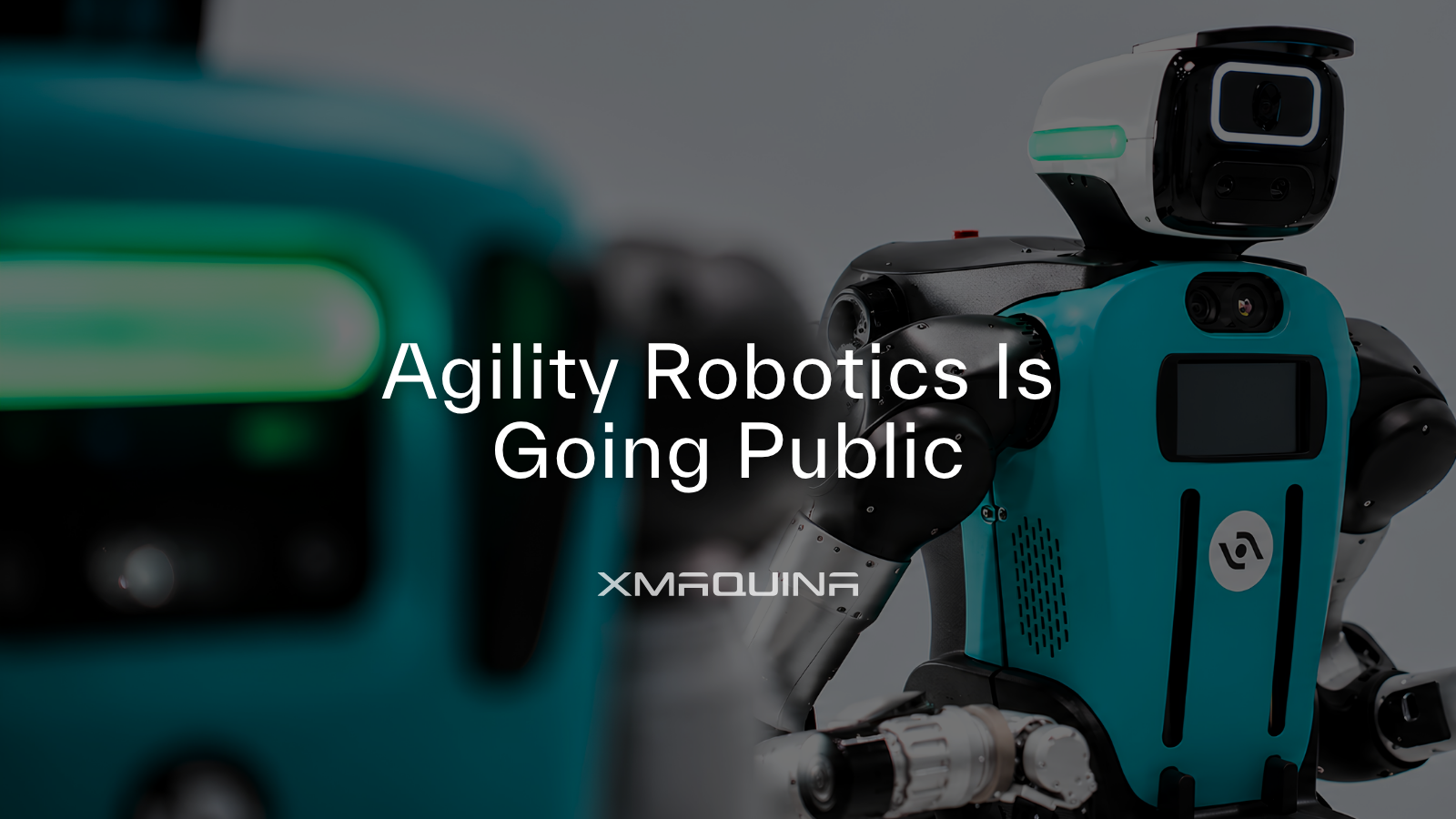
Agility Robotics unveiled Digit 5, the latest generation of its industrial humanoid robot.
The new platform increases payload capacity to 50 pounds and introduces redesigned legs, faster charging and a cooperative safety system designed to allow Digit to operate closer to people without the physical barriers commonly used around traditional industrial automation.
The new generation follows nearly three years of commercial deployment with Digit 4. Agility says the previous platform has accumulated more than 65,000 operating hours across customers including GXO, Schaeffler, Amazon and Toyota Motor Manufacturing Canada. At GXO’s facility near Atlanta, Digit has moved more than 100,000 totes.
Agility also disclosed more than $300 million in multi year customer orders for Digit 5 as of May, subject to contractual milestones. The orders span manufacturing, warehousing and logistics customers.
XPENG commissioned dedicated production lines for its next generation IRON humanoid in September, with an IRON robot autonomously walking off the line following production.
More than 80 percent of the core manufacturing processes on the line are automated, according to XPENG. The company is drawing on manufacturing systems and supply chain capabilities developed through its automotive business as it prepares IRON for higher volume production.
The development follows the more than $900 million financing completed by XPENG’s robotics business in August. The funding is being used to support development of IRON, Physical AI models, mass production and international commercialization.
Cognex agreed to acquire RealSense for approximately $500 million in cash, adding one of the robotics industry’s established 3D perception platforms to its machine vision business.
RealSense develops depth cameras and perception technology used by robots and autonomous systems to understand and navigate physical environments. The company is expected to generate between $80 million and $90 million in revenue during 2026, representing growth of more than 50 percent from the previous year.
The acquisition expands Cognex into robotic perception alongside its existing industrial machine vision business. Cognex estimates the robotic perception market at approximately $600 million today and expects it to reach around $1.6 billion by 2030.
The transaction is expected to close during the fourth quarter of 2026, subject to customary closing conditions.
Boston Dynamics opened its Robotics Metaplant Application Center inside Hyundai Motor Group Metaplant America in Georgia, creating a dedicated facility for training Atlas on automotive manufacturing tasks.
Atlas robots are already working through manufacturing processes at the facility. One of the first applications involves preparing and sequencing automotive parts before placing them in the correct order for assembly.
The center will be used to develop and validate Atlas applications before deployment across Hyundai Motor Group manufacturing sites. Boston Dynamics plans to expand the program into a larger facility in 2027.
XMAQUINA is a decentralized ecosystem, giving a global community early exposure to the world’s leading robotics companies before they disrupt trillion-dollar industries.
Join our Discord and connect with thousands of futurists building the XMAQUINA DAO.
Follow us on X for the latest updates.
Owner: