

NEURA Is Building Something Much Larger Than 4NE1
With $1.4 billion in new capital, a growing robotics portfolio and top industrial partners, NEURA is assembling a much larger Physical AI ecosystem.
.png)
September 7, 2026
Category:
Physical AI
Read time:
9 minutes
Share This:
A little over a year ago, we asked whether NEURA Robotics could become the next big player in humanoids. A lot has changed since then.
NEURA has raised up to $1.4 billion, grown its robotics portfolio, expanded its Physical AI training infrastructure and brought Amazon, NVIDIA, Qualcomm, Bosch and Schaeffler into its ecosystem. Its existing order book and strategic deployment pipeline now exceed $1 billion.
4NE1 is still at the center of the story, but NEURA increasingly looks like something larger than a humanoid company. It is building robots, AI, training infrastructure and the partnerships needed to connect all of it.
When we first wrote about NEURA, 4NE1 was central to the investment thesis. Since then, the company has started expanding in a different direction, adding established robotic platforms that already have customers, deployments and years of operational experience.
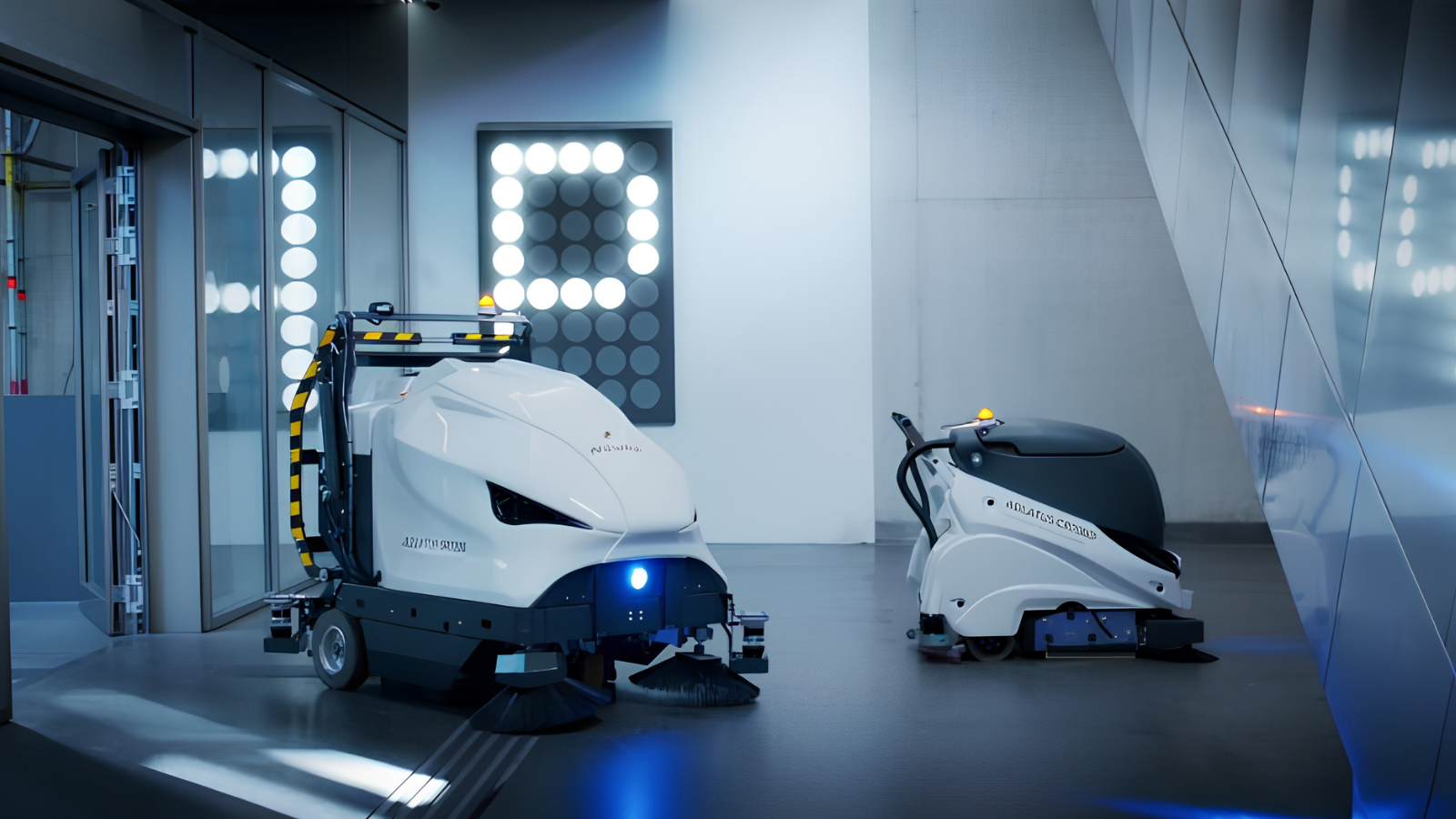
In August, NEURA acquired Bosch Rexroth’s ACTIVE Shuttle autonomous mobile robot business, followed less than two weeks later by ADLATUS Robotics. The latter brought hundreds of autonomous cleaning robots already operating across industrial, healthcare, logistics and public environments.
Both acquisitions are interesting for the same reason. NEURA isn’t starting from zero with either platform. It is acquiring robots that already work in commercial environments, then integrating its own sensing, AI and Neuraverse infrastructure around them.
4NE1 remains its most ambitious platform, but the company is increasingly building a portfolio of robots that can address different parts of the physical economy.
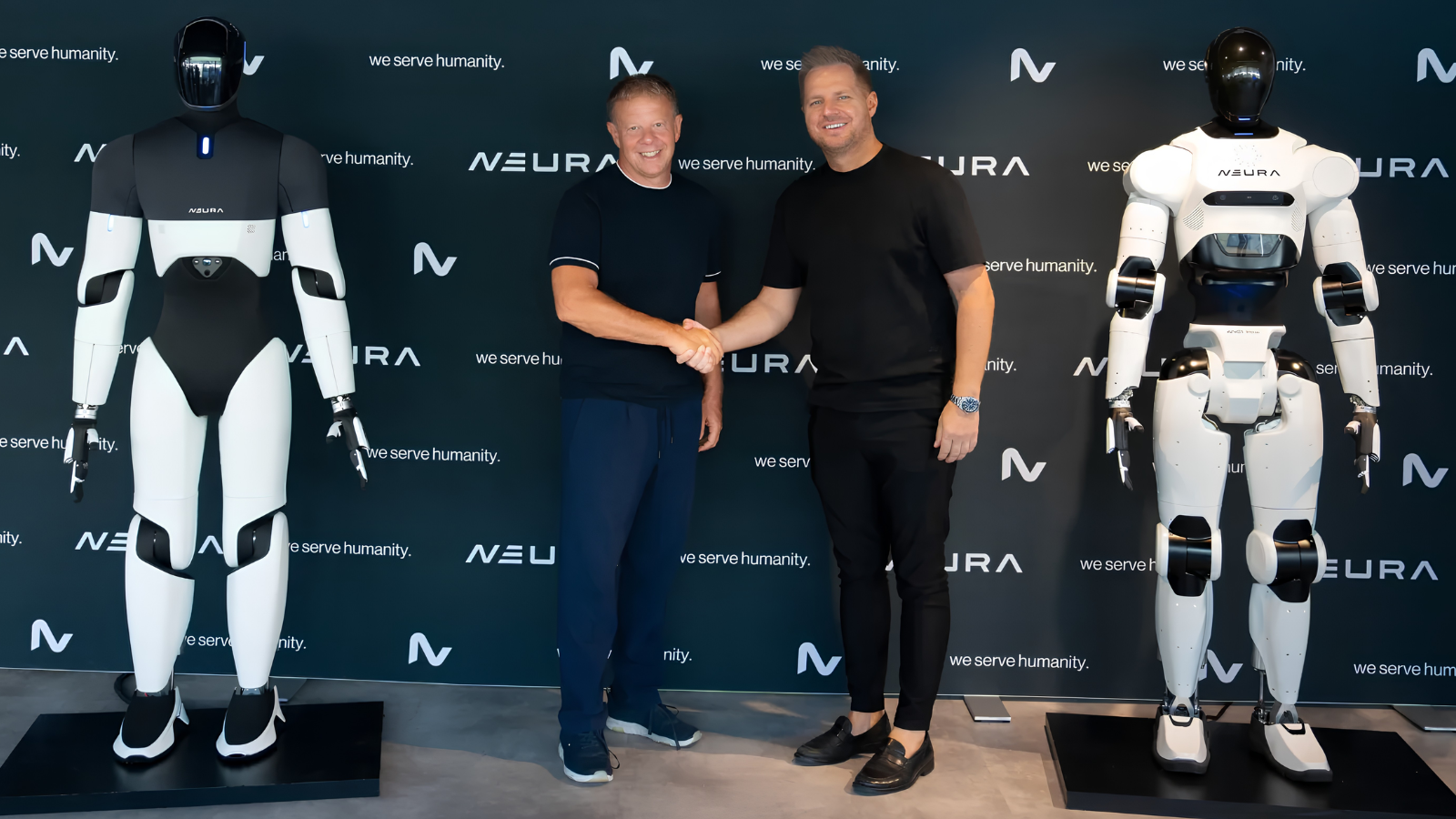
NEURA’s latest partnership with SECO adds another piece to that system.
SECO will work with NEURA to engineer and manufacture compute modules for its cognitive robots, including 4NE1, using Qualcomm’s Dragonwing processors. The companies also plan to work together on industrial data collection and Physical AI applications for semiconductor and electronics manufacturing.
The partnership follows a growing list of agreements that cover very different parts of the robotics stack. Qualcomm is working with NEURA on edge compute, AWS is providing cloud infrastructure for Neuraverse, while Bosch and Schaeffler bring industrial manufacturing, components and real-world deployment environments. The investor group behind NEURA’s latest round includes many of those same companies, alongside NVIDIA and the European Investment Bank.
The interesting part isn’t how many large companies NEURA has signed partnerships with. It is how closely those relationships map onto what NEURA needs to build Physical AI at scale: compute, cloud, components, manufacturing, data and somewhere to deploy the robots.
NEURA Gyms are being built as real-world environments where cognitive robots can train, collect data and improve their capabilities before those skills eventually feed back into Neuraverse. The company plans to use part of its Series C to expand these training environments internationally.

The SECO partnership follows the same idea, but inside a real industry. NEURA robots are expected to work in semiconductor and electronics manufacturing environments, generating production data that can then be used to develop new automation capabilities.
For NEURA, factories aren’t only places to sell robots. They are also becoming places to train them.
How does this relate back to Neuraverse? If a skill developed from one deployment can eventually become reusable across other robots and environments, the value sits not only in selling more hardware, but in what the wider network learns from every deployment.
In June, NEURA announced a Series C of up to $1.4 billion, which the company describes as the largest funding round ever raised by a full-stack robotics company.
Amazon, NVIDIA, Qualcomm, Bosch, Schaeffler, Tether, imec.xpand and the European Investment Bank are among the investors. It is an unusual group because it brings together many of the industries NEURA will depend on as it scales, from AI and semiconductors to manufacturing and industrial automation.
The capital gives NEURA considerably more room to pursue its ambitions, but those ambitions are also getting bigger. Moving toward production of millions of robots by 2030 will require NEURA to prove it can manufacture reliably at a scale it has never attempted before, while turning Neuraverse and its training infrastructure into something customers and developers actually use.
The NEURA we invested in looks quite different today.
4NE1 remains important, but the investment case is no longer only about whether NEURA can build a competitive European humanoid. The company is assembling a broader robotics portfolio around its own AI and software infrastructure, while bringing some of the largest technology and industrial companies into different parts of that system.
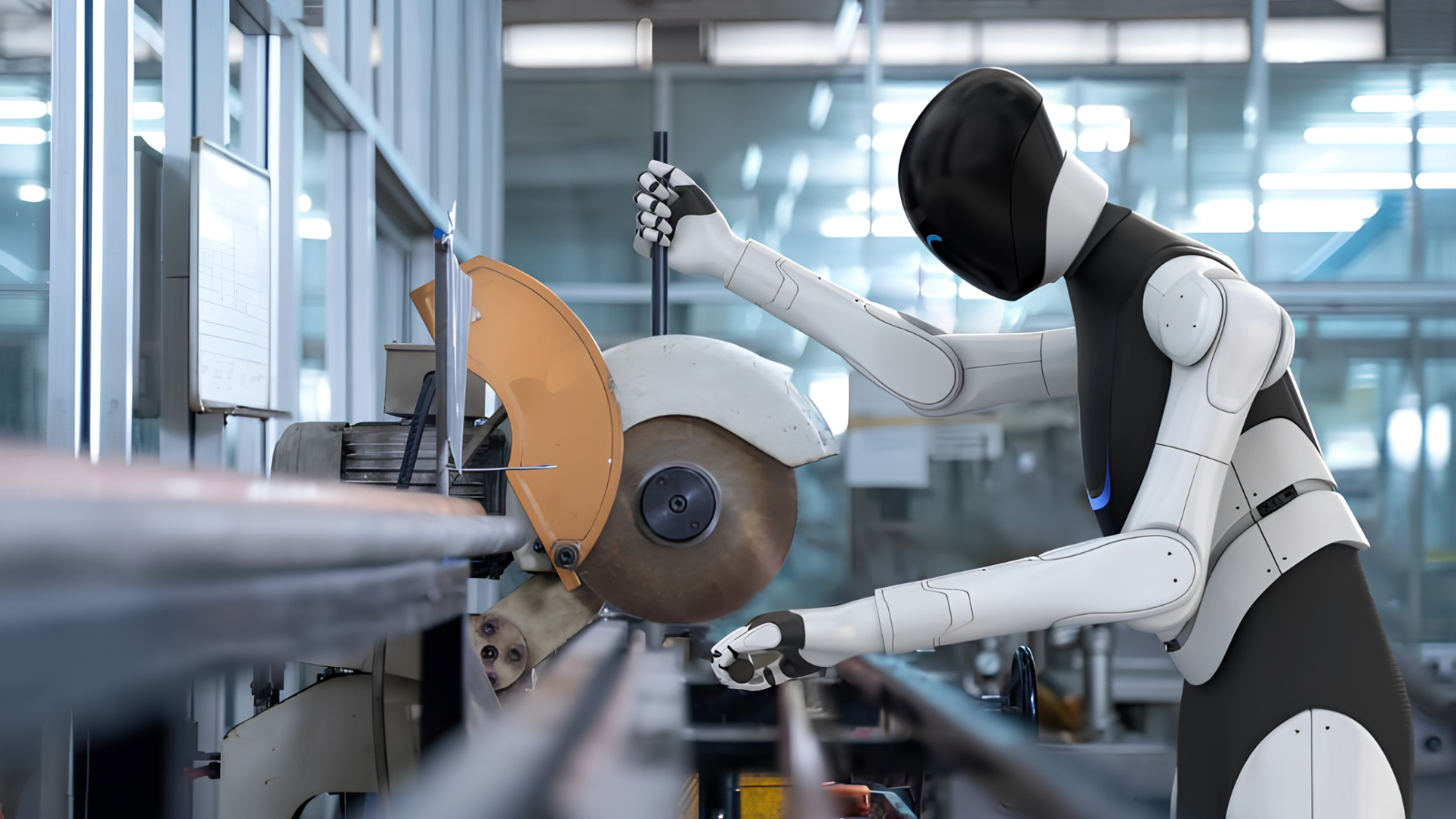
There is still a long way between that strategy and producing intelligent robots at mass-market scale. Competition from the US and China is moving quickly, and NEURA’s targets are ambitious even by the standards of the humanoid industry.
However, Europe already has much of what Physical AI needs. Advanced manufacturing, industrial automation, semiconductors, engineering and some of the world’s largest industrial companies.
NEURA’s opportunity may be in connecting those pieces.
XMAQUINA is a decentralized ecosystem, giving a global community early exposure to the world’s leading robotics companies before they disrupt trillion-dollar industries.
Join our Discord and connect with thousands of futurists building the XMAQUINA DAO.
Follow us on X for the latest updates.
Owner:
.png)

