Building RCM 02
Access is only the beginning.
.png)
July 9, 2026
Category:
Physical AI
Read time:
7 minutes
Share This:
A Gecko robot climbs the inside wall of a power-plant boiler, magnetic wheels gripping steel no human has touched in years, dragging an array of ultrasonic sensors and a color lidar across the surface. A few hours later the customer is looking at a full-color, three-dimensional model of that boiler. Every weld, every millimeter of wall thickness, every corroded patch the software has flagged in red.
Gecko goes to a physical asset that has never been recorded at all and manufactures the data from scratch, converting a corroding, humming, decades-old piece of infrastructure into a structured digital twin. As founder Jake Loosararian puts it, the industrial world still "operates in a data sense like the 19th century," and the AI race "will be won by those who control unique physical-world data, not just algorithms."
Gecko started in 2013 as an engineering project at Grove City College in Pennsylvania, where Loosararian wanted a robot that could inspect the inside of a boiler without a person rappelling down the wall with a handheld gauge. By 2016 he had two co-founders, Troy Demmer and Ian Miller, and a spot in Y Combinator's winter batch.
A decade later Gecko is valued at $1.25 billion, following a $125 million Series D in June 2025 led by Cox Enterprises, with Founders Fund and 8VC on the cap table. It is headquartered in Pittsburgh, which Loosararian likes to call the emerging capital of physical AI, and it is one of the few robotics companies of its generation already generating real revenue from named industrial customers.
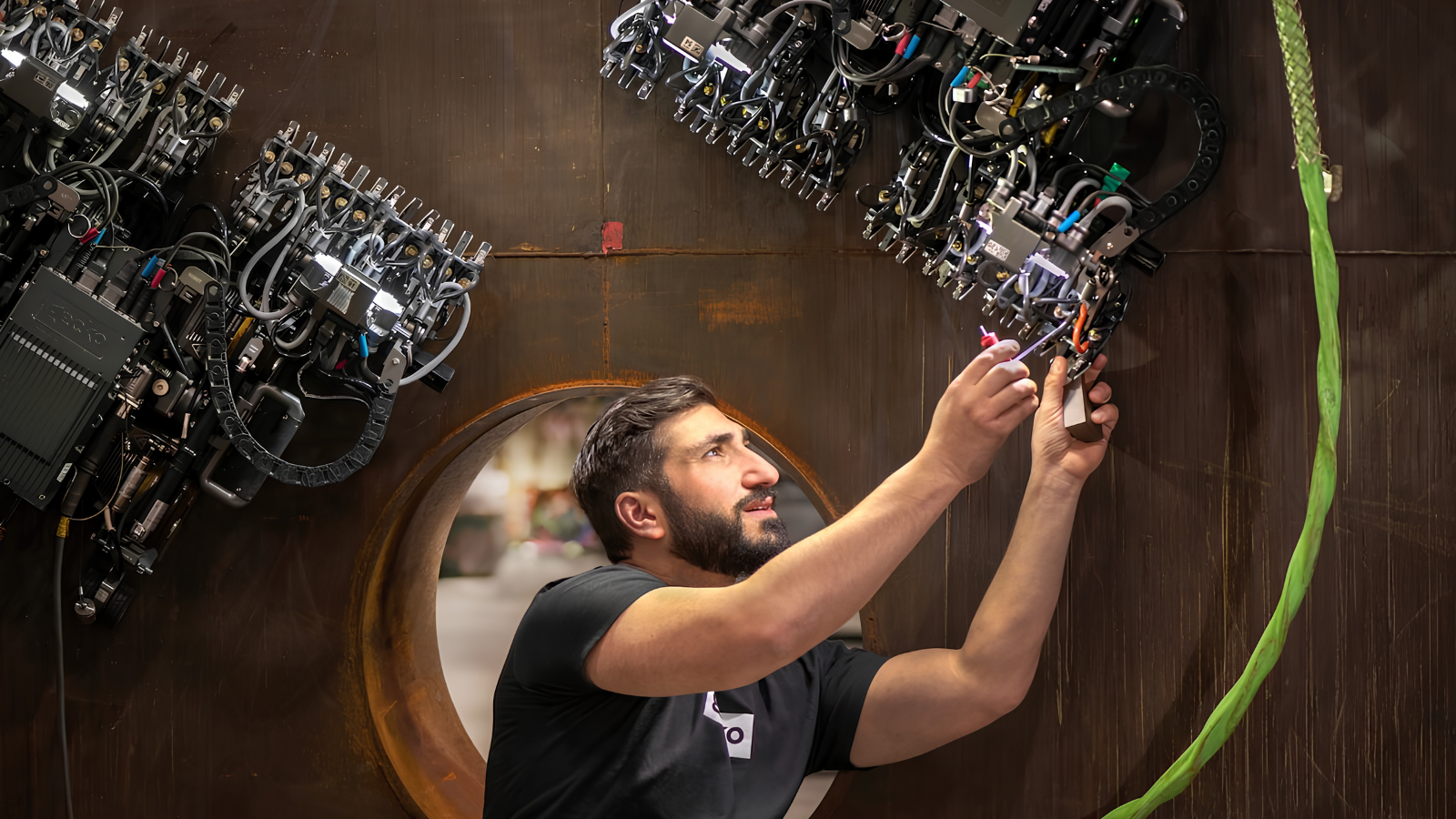
Gecko's hardware is a family of embodiments, because the physical world is not one shape. TOKA robots drive straight up the steel walls of tanks and boilers on magnetic wheels, carrying phased-array ultrasound, acoustic sensors, eddy-current detectors, cameras, and lidar. Drones reach what the ground robots cannot. Submersibles work hulls and ballast tanks from the waterline down. Fixed sensors stay behind and instrument an asset permanently.
.png)
Coverage is the difference. A technician on a rope with a handheld probe physically touches roughly 1% of a structure and infers the rest. A Gecko deployment records millions of data points per hour.
In May 2026 the company began integrating Ouster's Rev8 color lidar to "navigate complex industrial environments and create high-fidelity digital twins of critical assets," capturing "every 3D point in full color" so the software "can do more than just map the physical world, it can understand asset health." Not inspect, not scan: build a digital twin of a real place.
Everything the robots and sensors collect flows into Cantilever, the operating platform Gecko launched in October 2023. Cantilever renders the 3D model, quantifies the damage, predicts where an asset will fail, and merges the robotic data with a facility's existing records into what the company describes, in its work with U.S. Steel, as "a single source of truth for entire steel mill operations."
Every deployment adds proprietary, physically grounded data to Cantilever that no competitor can scrape off the internet or buy from a broker, because it exists nowhere else. Loosararian describes the result as a flywheel: better data makes better software, which guides better robots, which collect better data. The robots are the cost of acquisition. The accumulating library of digital twins is the asset.
The customer roster is specific and live. In power, Gecko signed a multi-year agreement with NAES, the largest independent U.S. power operator at 65 gigawatts under management, worth more than $100 million with the option to grow past $250 million.
In oil and gas it signed three agreements with ADNOC and staffed an engineering team in Abu Dhabi.
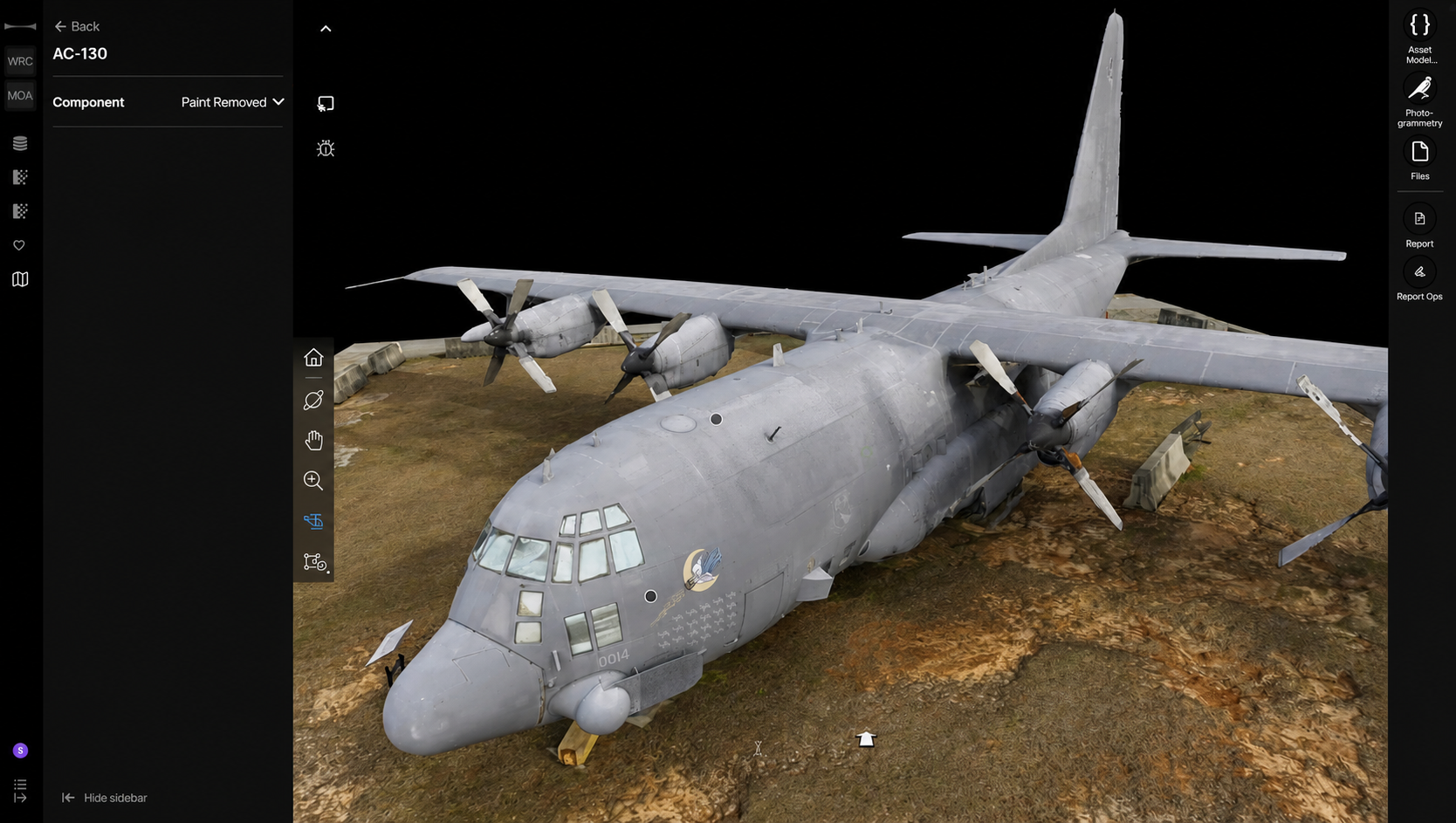
With L3Harris it built an extended-reality system that turns thousands of images of a military aircraft into a precise 3D model for remote maintenance. U.S. Steel, BP, Dow, Marathon, Duke Energy, and International Paper anchor the industrial base, and a U.S. Navy contract to assess fleet readiness shows the platform reaching into government. American infrastructure carries a C-minus grade from the civil engineers who track it, which is another way of saying there is a decade of this work waiting to be done.
The robotics industry has largely settled on how to train a robot for physical work, and it is not to let an expensive machine learn by trial and error on a real factory floor. It is to train and validate the robot in simulation first, inside a physically accurate digital twin of the facility, then transfer that learning to the real hardware. This is the premise of NVIDIA's Omniverse and Isaac Sim, and it is already how humanoids get built.
NEURA Robotics trains its 4NE1 humanoid in digital-twin environments before deployment, and Foxconn trains humanoids for factory tasks like assembly and cable insertion the same way. But a simulation is only as good as its fidelity to the real place, and most twins are built from idealized CAD drawings, not the corroded, out-of-spec state industrial assets are actually in.
That gap is what Gecko captures. One caveat up front. Gecko does not build humanoids, sell humanoid-training data, or feed any of these simulators today.
The connection is optionality, not a signed deal, but it is grounded in what Gecko already produces:
None of this requires Gecko to change course. It requires the humanoid wave to arrive into a physical world that has actually been digitized, and Gecko to keep being one of the few companies digitizing the physical world.
Whichever humanoid company wins, its robots will have to work somewhere real. A plant, a mill, a ship, a refinery. Before a machine can operate in a place, that place has to be turned into something a machine can understand. Gecko has spent a decade building the robots, the sensors, and the platform to do exactly that, one facility at a time.
XMAQUINA is a decentralized ecosystem, giving a global community early exposure to the world’s leading robotics companies before they disrupt trillion-dollar industries.
Now, you don’t have to be sidelined. Own the rise of humanoids.
Join our Discord and connect with thousands of futurists building the XMAQUINA DAO.
Follow us on X for the latest updates.
Owner: