

Agility Robotics Is Going Public
What the proposed SPAC transaction means for the DAO.
.png)
July 1, 2026
Category:
Physical AI
Read time:
10 minutes
Share This:
June can be summed up by three words: capital, commercialization, and execution.
The month’s largest announcements were led by billion dollar funding rounds, expanding deployment pipelines, and growing institutional participation across the sector. Companies with proven commercial traction continued to attract capital at scale, while research organizations invested more aggressively in the AI systems expected to power the next generation of humanoids.
Alongside these developments, public market activity gathered momentum, manufacturers became more willing to demonstrate robots operating in live production environments, and investment activity expanded across the United States, Europe, China, and Japan.
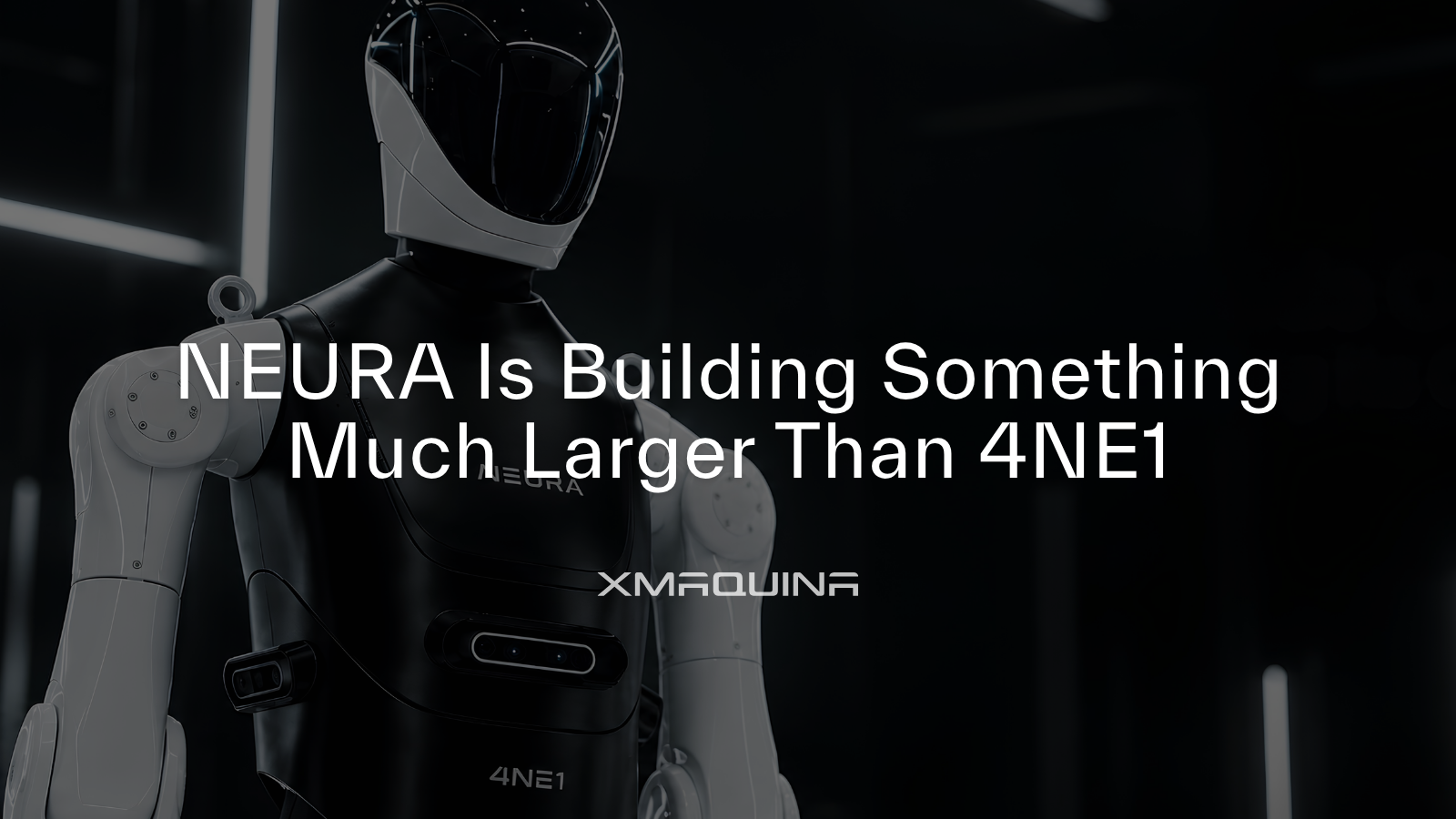
NEURA Robotics announced a Series C funding round of up to $1.4 billion, making it one of the largest capital raises ever completed by a full stack robotics company.
The investor group spans nearly every layer of the robotics ecosystem, including Tether, Amazon, NVIDIA, Qualcomm, Bosch, Schaeffler, the European Investment Bank, Lingotto, InterAlpen Partners, and imec.xpand. NEURA also disclosed an orderbook exceeding $1 billion as it prepares for large scale shipments of its flagship humanoid, 4NE1.
The composition of the round may be just as important as its size. Rather than purely financial investors, many participants provide infrastructure, AI hardware, manufacturing expertise, industrial customers, or financing capacity. Robotics is becoming an ecosystem investment rather than a single company bet.
1X Technologies announced the creation of the World Model Lab, a dedicated research group focused on developing foundation models for humanoid robots.
Instead of training robots to complete individual tasks, the objective is to build systems capable of understanding physics, objects, motion, causality, and the physical world itself. The lab will combine internet scale video data, simulation, teleoperation data, and real world experience collected by deployed robots.
As humanoid deployments expand, companies that can continuously improve their models through deployment data may establish a meaningful long term advantage. Increasingly, the competitive moat is not only better hardware, but the ability to create a feedback loop between robots, data collection, and model improvement.
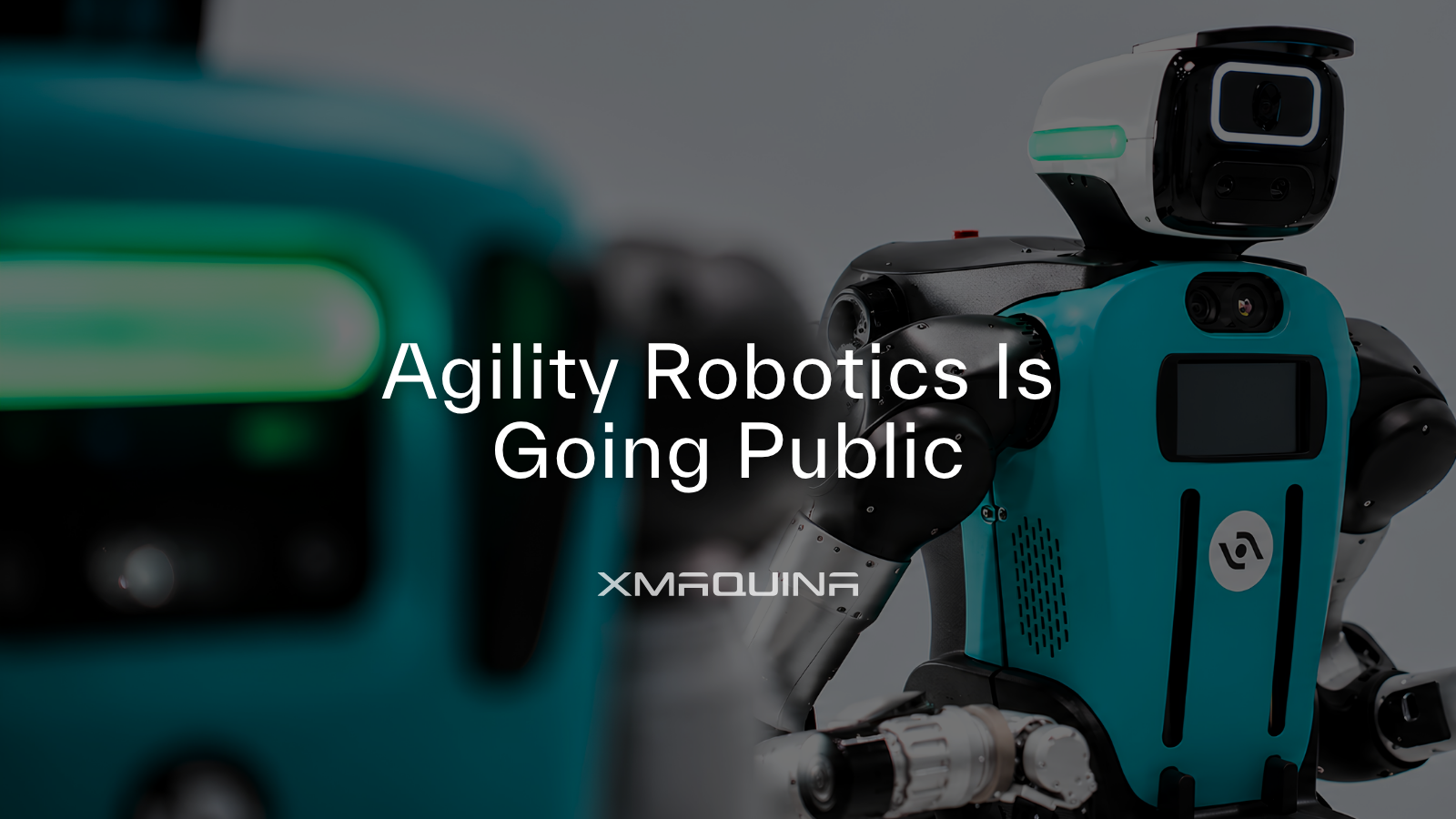
Agility Robotics announced plans for a proposed public listing at a reported $2.5 billion valuation.
Its flagship humanoid, Digit, is already operating inside commercial facilities with customers including GXO, Schaeffler, Toyota Motor Manufacturing Canada, and Mercado Libre. Unlike many robotics companies still focused primarily on demonstrations, Agility has spent years validating its technology in production environments.
The proposed listing represents another milestone for the industry. As leading robotics companies mature, public markets are beginning to emerge as a realistic path alongside traditional venture funding.
Standard Bots raised $200 million at a $1 billion valuation.
The company says its systems are on track to account for approximately 10 percent of new industrial robot deployments in the United States next year, reflecting rapid commercial adoption of lower cost robotic automation.
The announcement also highlights a broader trend. Investors are increasingly rewarding measurable deployment and customer adoption rather than purely technical progress. Capital is following companies demonstrating that robots are generating value inside real businesses.
AgiBot began a continuous six day livestream from Longcheer Technology’s tablet manufacturing facility.
The broadcast followed humanoid robots performing quality inspection alongside human workers on an active production line, offering one of the industry’s longest public demonstrations of continuous industrial operation.
The significance extends beyond the robots themselves. Public demonstrations over multiple shifts expose systems to real production conditions that are difficult to replicate in staged videos. As deployment claims become more ambitious, long duration transparency is becoming increasingly valuable.
Following DAO approval, XMAQUINA’s Execution Engine began acquiring a $540,000 position in Genki Robotics.
The investment marks the DAO’s seventh portfolio allocation and its first investment into Japan, expanding geographic diversification across one of the world’s most advanced robotics ecosystems.
Japan has been a global leader in industrial robotics for decades. As humanoid robotics enters commercial deployment, expanding exposure into the Japanese market broadens the DAO’s access to companies building the next generation of physical AI infrastructure.
Apptronik unveiled Apollo 2, the latest generation of its humanoid robotics platform.
The new platform introduces modular wheeled and bipedal mobility, allowing operators to configure the robot for different environments. Other updates include proprietary actuators designed for scalable manufacturing, swappable batteries for extended uptime, and an integrated software platform comprising Apollo 2 hardware, Artemis for autonomy and control, and Fleet Connect for fleet management.
The announcement also highlights Apptronik’s ongoing collaboration with Google DeepMind, combining the Apollo platform with Gemini Robotics to advance embodied AI for real world deployment.
SoftBank is reportedly preparing to invest more than $300 million into Agile Robots as part of an $800 million funding round.
Agile Robots generated approximately €200 million in revenue during 2024 while expanding across industrial automation, AI software, robotic arms, and humanoid robotics. The company also maintains strategic partnerships with Google DeepMind and NVIDIA.
For Masayoshi Son, the reported investment fits into a much broader strategy. Over the past year, SoftBank has assembled positions across foundation models, industrial robotics, manufacturing automation, and embodied AI. Rather than backing isolated companies, it is building exposure across the infrastructure required for physical intelligence.
XMAQUINA is a decentralized ecosystem, giving a global community early exposure to the world’s leading robotics companies before they disrupt trillion-dollar industries.
Now, you don’t have to be sidelined. Own the rise of humanoids.
Join our Discord and connect with thousands of futurists building the XMAQUINA DAO.
Follow us on X for the latest updates.
Owner:
.png)

